
Shape-Shifting Enemies: The Science Behind Viral Mutations
Remember when COVID-19 emerged? Remember when there were new variants appearing on the news every day? SARS-CoV-2, the virus that causes COVID-19, was mutating and creating new variants. Various mutations are fairly normal. Viruses mutate to adapt to their surroundings to effectively move from host to host. However, with these mutations comes a great risk: with mutations, it is easier for viruses to invade the immune system, vaccines, and treatments. This is because a mutated virus is able to acquire traits that aid it in reproduction and adherence to human cells.
What Are Viruses?
To put it simply, viruses are small microorganisms made up of genetic information like DNA and RNA inside a shell called a capsid. Viruses infect hosts and cannot reproduce without them. We owe sicknesses such as the flu and the common cold to viruses. Viruses—like a parasite—can survive outside their host, at least until their capsid breaks down. For a virus to survive in its host, it must feed off the host’s cells to reproduce. There are two main types of virus reproduction: the lytic cycle and the lysogenic cycle. In the lytic cycle, the virus utilizes the functions of the host cell to replicate itself. During this, genetic material is wrapped up inside the capsid until it bursts. Once it does, all of the copies made inside the virus are now free to infect other cells. On the other hand, the lysogenic cycle is more of a silent killer. Rather than starting off with reproduction, in this cycle, the virus will simply enter the cells and wait. Unfortunately, the cell does not realize the virus is there and will continue with its reproduction. However, when a copy of a cell is made, each of the copies will also have the virus in it. When these cells burst, the viral particles will spread through your body.
How Do Viruses Mutate?
Now that we have the same background knowledge on viruses, we can start discussing the fun stuff. Viruses mutate when an error is made during the process of reproducing. When the mutations begin to accumulate in a virus, the virus is now a variant. When a variant has enough biological capabilities, a strain is produced. However, it is very rare for a strain to be created, as mutations are not always beneficial to the variants. Sometimes it can cause no change in the virus, harm it, or benefit it. A virus usually changes in two ways: antigenic drift and antigenic shift. Antigenic drift refers to when small mutations occur, causing a change in the surface proteins or “antigens” of the virus. However, antigenic shift is much more uncommon and refers to a significant change in the surface of a virus’s proteins, which can sometimes create an entirely new surface of proteins.
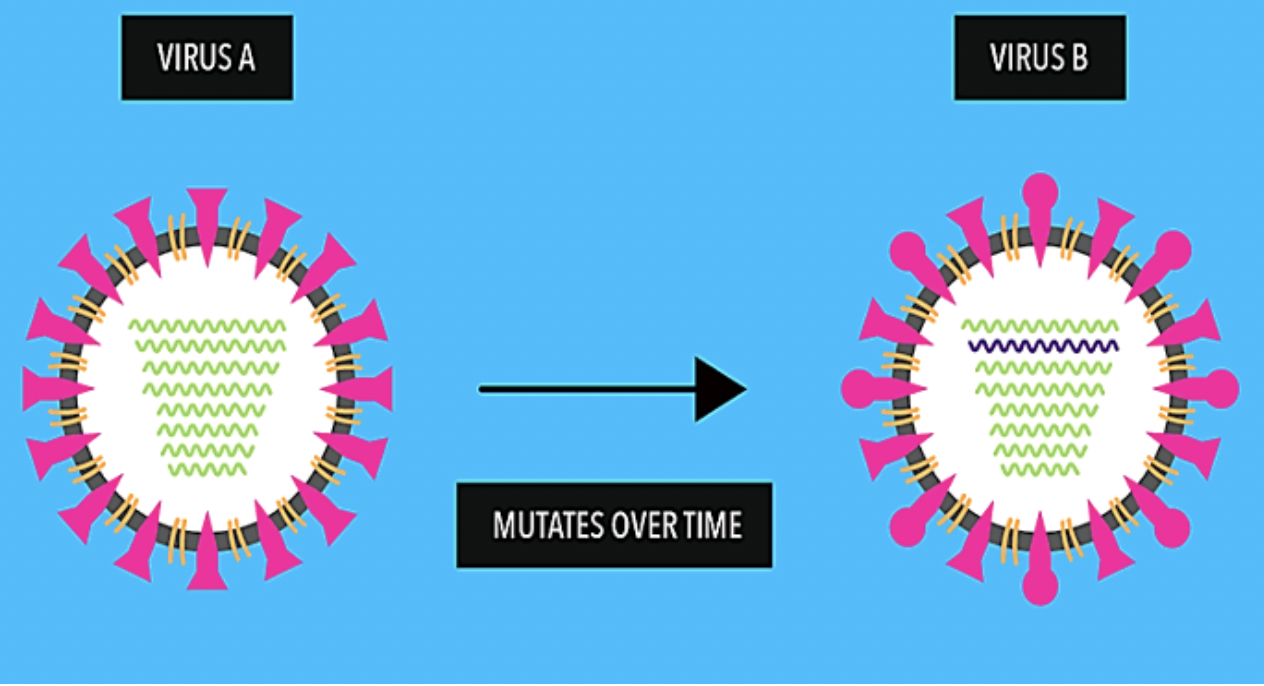
Here is a visual to help you understand virus mutations better!
.Examples of Mutated Viruses
New strains of viruses are always being discovered every year. An example of a new strain of Influenza was discovered in 2020. Swine Flu or G4 EA H1N1 is an infectious virus that has been spreading throughout China. Although there is no current evidence that suggests this virus can be transmitted from human to human, pigs have been identified as the main victims of this virus. As of now, there are only 5 current cases in humans in China with the swine flu. Since pigs are extremely susceptible to the Influenza A strain of the virus, they act as a host for the development of new Influenza viruses.
In November of 2021, a new variant of coronavirus 2 (SARS-CoV-2) named Omicron was identified in Botswana. This specific variant has more mutations compared to variants Delta, Alpha, Beta, and Gamma. In the spike protein, the Omicron variant has at least 32 mutations. The spike protein is composed of over 1,000 amino acids, yet this mutated variant contains 28 amino acid substitutions, three deletions, and one insertion. Fifteen of these mutations are in a region dedicated to neutralizing antibodies: the RBD. To put it simply, this means that this variant may be more effective in evading the antibodies in the human immune system. Furthermore, this virus may be more infectious. Evidence suggests that mutations in the RBD make it harder for human cells to detect the virus due to the shape changes from mutations in the RBD region. This makes the virus more likely to bind with the human ACE2 receptor, which can induce rapid cell-cell fusion and the formation of multinucleated cells.
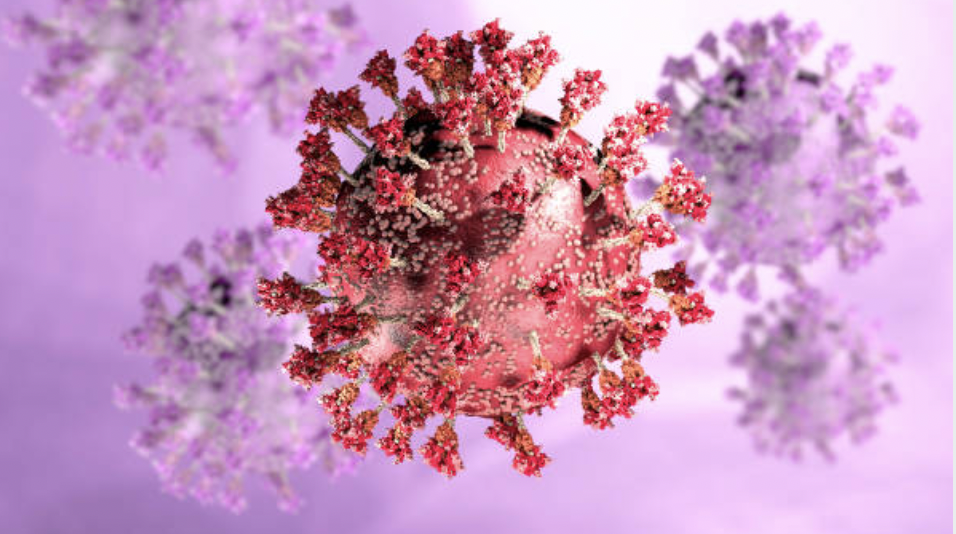
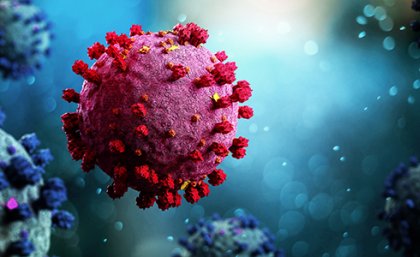
This is what the Omicron variant (left) looks like compared to the Delta variant (right)!
What Does This Mean for Vaccines
While virus mutations sound scary, they usually do not affect viruses significantly. This is because, as mentioned before, most mutations do not alter the actual characteristics of the virus itself. Additionally, the professionals who create vaccines for viruses are well aware of virus mutations. This is why the majority of modern vaccines, such as Pfizer and Moderna, utilize mRNA. There are two key components of mRNA vaccines: the mRNA itself and the vessel that delivers it. The mRNA is a miniature piece of the genetic code of the virus, while the vessel—usually salt, fat, or sugar—delivers the mRNA to cells. Essentially, if a mutation were to occur, rather than changing the entire vaccine, only the small piece of mRNA would be updated.
How Do We Solve This
While it is impossible to stop a virus from mutating, scientists have been working on stopping these mutations from spreading. Think of it this way: there is a very low chance for a virus mutation to be beneficial to the virus. If this mutation were to keep replicating, let’s say around 1 million times, the chances of the mutation becoming beneficial are very high. So, what scientists are trying to do is limit the replication number.
One way scientists do this is by limiting RNA production. In fact, a group of indoline alkaloid-type compounds was able to successfully stop viruses like Ebola from replicating. Furthermore, some researchers discovered that ZBP1—a binding protein—was able to control the replication of Zika and West Nile viruses. Fundamentally, the protein is able to detect a virus in a cell by looking for the accumulation of RNA. When a virus is recognized, the ZBP1 will signal for the cell to undergo necroptosis: specialized cell death. This allows the body to create antibodies and expel the virus. Another beneficial protein scientists have discovered is DDX21. These proteins limit the growth of virus replication by binding to the virus’s RNA and hindering progress in their R-loops: a three-stranded nucleic acid structure that is made of DNA and RNA.
Conclusion
I hope that after reading this, you have gained some knowledge about viral mutations. Although they may sound scary, the actual chances of a virus mutation being significantly beneficial to the virus are quite low, so you should not fret. In fact, most modern vaccines are made to address them!
Fun fact: Viruses are so small you can fit 100 million of them onto the head of a pin!
Works Cited
“BUSM Researchers Identify Chemical Compounds That Halt Virus Replication | Chobanian & Avedisian School of Medicine.” Bu.edu, 2025, www.bumc.bu.edu/camed/2013/03/22/busm-researchers-identify-chemical-compounds-that-halt-virus-replication/. Accessed 17 May 2025.
Canyon, Deon, et al. SARSCOV2 Mutations, Variants, and National Security. Daniel K. Inouye AsiaPacific Center for Security Studies, 2021.
Cleveland Clinic. “Virus.” Cleveland Clinic, Cleveland Clinic, 29 Mar. 2023, my.clevelandclinic.org/health/body/24861-virus.
Mahdee Sobhanie, MD. “The Ohio State University Wexner Medical Center.” Osu.edu, 14 Dec. 2021, wexnermedical.osu.edu/our-stories/virus-mutations-what-do-they-mean.
Mujahed I, Mustafa, et al. “Genotype 4 Reassortant Eurasian Avian-like H1N1 Virus: Are We Ready for Another Global Threat or Pandemic?” Journal of Infectious Diseases and Epidemiology, vol. 6, no. 5, 13 Sept. 2020, https://doi.org/10.23937/2474-3658/1510159. Accessed 7 Oct. 2020.
Nightengale, Laura. “How COVID-19 Mutates and How It Affects Vaccines.” OSF HealthCare Blog, 31 Dec. 2020, www.osfhealthcare.org/blog/how-covid-19-mutates-and-how-it-affects-vaccines/.
Tian, Dandan, et al. “The Emergence and Epidemic Characteristics of the Highly Mutated SARS-CoV-2 Omicron Variant.” Journal of Medical Virology, vol. 94, no. 6, 3 Feb. 2022, https://doi.org/10.1002/jmv.27643.
“Virology 101 Series: How Viruses Mutate.” Moderna, 2024, www.modernatx.com/en-US/media-center/all-media/blogs/how-viruses-mutate.
“What Are Viruses and How Do They Work? | School of Medicine.” Tufts.edu, 3 Apr. 2020, medicine.tufts.edu/news-events/news/what-are-viruses-and-how-do-they-work.