Chemotherapy Drugs: An In-Depth History
In 2022, around 22 cases of cancer were diagnosed, and 9.2 million people globally succumbed to the disease. Cancer–a horrific disease–continues to devastate the lives of millions around the world with no clear cure. Cancer dates back to the Egyptians in 3000 BC. The Edwin Smith Papyrus is a copy of one of the oldest medical textbooks in the world and was a manual on trauma surgery. In this, there were cases in which 8 tumors were found on the breast area, which were then removed using a “fire drill.” The text explicitly stated that “There is no treatment.” It is shocking that despite the rise of modern technology, which utilizes effective drug delivery through nanoparticles or AI, cancer still has no cure. With this being said, there have been many advances in the chemotherapy realm, and I believe it is worthwhile to acknowledge these life-changing drugs.
What is Cancer?
Cancer takes the form of around 100 evils; some affect your blood, while some affect your bones. Although different forms of cancer have different features, a general definition of this disease is uncontrolled cell growth, which can spread throughout the body. Cancer can be caused by genetic and environmental factors, but all forms of cancer affect how cells grow and divide. Cells are the fundamental unit of life, and there are around 30–37 trillion of them in your body! Your cells are controlled by genes that tell them to grow and die. Cancerous cells do not respond to your genes, which can cause things like tumors.
While this was more of a general explanation, I believe a narrower one is necessary. To begin, the behavior of a human cell is controlled by the DNA, which is condensed and arranged into chromosomes, which are located in the nucleus. The order and arrangement of the DNA tell the cell how many and how much protein it should produce. As you can predict, when an alteration appears in the DNA sequence—a mutation—it can disrupt protein production, which contributes to tumor development and progression. The majority of people believe that mutated genes are hereditary. While this is true, only 10% of cancer cases are linked to inherited genetic mutations. On the other hand, the rest consist of errors in cell division and multiplication due to environmental factors.
Chemotherapy Drugs
You might be wondering what chemotherapy drugs are in the first place. Like the name suggests, chemotherapy drugs are the medicine used for chemotherapy in cancer patients. These drugs are able to kill cancer cells, which grow and multiply rapidly. Like mentioned before, unlike regular cells, cancer cells do not die when they are no longer needed, which allows them to multiply and potentially form tumors. There are around 100 different kinds of chemotherapy drugs which are specially designed to address different types of cancer. They are organized in six main categories: alkylating agents, antimetabolites, topoisomerase inhibitors, anti-tumor antibiotics, mitotic inhibitors, and corticosteroids.
Alkylating agents attach to the DNA. As you may know, the DNA is made of a double helix structure, so these chemotherapy drugs produce strong bonds between the two strands. This prevents the two strands from splitting which in turn prevents the cancer cells from making copies of DNA. This process aims to reduce the cancer cells from multiplying. Antimetabolites are trickier! Antimetabolites disguise themselves as building blocks of DNA, which cancer cells (and normal cells) need to copy to multiply. When cancer cells use the antimetabolites, an error is made in their genetic code, which prevents the cancer from correctly copying its DNA. This stops the cancer from spreading. Like its name suggests, topoisomerase inhibitors counteract the work of an enzyme named topoisomerase. Topoisomerase is responsible for untangling the DNA, uncoils and joining them back together. Topoisomerase inhibitors prevent the enzyme from connecting the strands together which hinders progression in the DNA replication process. Anti-tumor antibiotics is a more general term for four different kinds of antibiotics: bleomycin, dactinomycin, mitomycin, and anthracyclines. The main goal of these drugs is to damage the DNA of cancer cells. Now, unlike the chemotherapy drugs previously mentioned, mitotic inhibitors deal with chromosomes. When a cell divides, tiny filaments line up the copied chromosomes along the center of the cell so when the cytoplasm splits each new cell has identical copies of the DNA. Mitotic inhibitors wreak havoc by botching the order of the filaments which prevents the cell from dividing properly. Finally, corticosteroids do not kill cancer cells directly but they do help enhance the patient’s quality of life who is battling cancer. Corticosteroids can help improve the patient’s appetite, sickness, and swelling.
The History of Chemotherapy Drugs
1940s–1950s
World War II was responsible for a lot of damage, including the lives of 75 million civilians and soldiers. But what if I told you that out of this devastating era of terror, a new light for cancer recovery emerged? It all started when sulfur mustards were accidentally spilled on troops from Bari Harbor. It was found that the bone marrow and lymph nodes were rapidly decreasing in those exposed to the mustard gas. Yale pharmacologists, Alfred Gilman and Louis Goodman were determined to examine potential benefits of the mustard gas chemicals. Through a study done with mice with a transplanted lymphoid tumor, they saw severe regression of the tumor. Knowing this, they were able to convince Gustaf Lindskog—a thoracic surgeon—to use nitrogen mustard as a treatment for a patient with non-Hodgkin’s lymphoma in 1943. Many regressions in lymphoma patients were observed and when the study was officially published in 1946 it set off waves of testing for new alkylating compounds! This study in particular was beneficial to the U.S., who witnessed widespread use of nitrogen mustard in lymphoma patients after 1946.
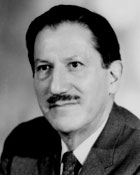
This is Louis S. Goodman, one of the scientists behind the effects of nitrogen mustard!
Anti-tumor antibiotics also gained some momentum during this time. In the U.S., the War Department and the Office of Scientific Research and Development (OSRD) thought that penicillin had anti-tumor effects. Although these were never confirmed, a drug named actinomycin D was discovered by Selman Waksman and H. Boyd Woodruff by screening soil bacteria. This was used in several pediatric tumors in the 1950s and 1960s.
Additionally, in 1948 thiopurines, 6-thioguanine and 6-mercaptopurine, were developed by Gertrude Elion and George Hitchings. By isolating a substance that restricted adenine metabolism, the two scientists largely impacted the future of cancer recovery. They created the basis for the drug azathioprine, which was later developed in 1963, and plays a key role in today’s immunosuppressants in organ transplant.
The 1950s were a rather confusing period for chemotherapy development, to say the least. Chemotherapy drugs were fairly new, so many countries wanted to explore this vast field and began investing. For instance, in 1954, the U.S.’s NCI (National Cancer Institute) was encouraged to develop a childhood leukemia program and provided $1 million for cancer drug development.
1960s–1990s
The 1960s began an era of skepticism regarding the benefits and negatives of chemotherapy drugs. Some people worried that the drugs were doing more harm than good for patients. Chemotherapy drugs at this time were referred to as “poison,” and several oncologists were facing backlash by their own institutions. Regardless, the first proven cures using chemotherapy drugs were discovered through acute childhood leukemia and Hodgkin’s disease. After the Eli Lilly company discovered plant alkaloids from Vinca rosea, a program named “VAMP” was designed. Dr. Howard Skipper discovered that in leukemia, the success of the treatment depended on the number of cells present at the beginning of each treatment. Therefore, a switch was made to more aggressive forms of chemotherapy, hence the creation of “VAMP.” Slowly but surely, “VAMP”—named for the drugs vincristine, amethopterin, 6-mercaptopurine, and prednisone—began to see a high remission rate.
Furthermore, in the 1970s Hodgkin’s disease—cancer that affects the lymphatic system—began to see successful treatment options. To specify further, with the availability of Vinca alkaloids, doctors Vincent T. DeVita, C. Gordon Zubrod, and Paul P. Carbone began the MOPP program. Essentially, this program combined procarbazine, nitrogen mustard, vincristine, and prednisone. Today, Hodgkin’s disease is curable in 90% of cases.
In the 1970s, the first polyamine inhibitor, an ornithine decarboxylase inhibitor, was created. This was later used in the 1980s as treatments for trypanosomiasis and other parasitic infections. a-difluoromethylornithine is another popular polyamine inhibitor and was used for cancer therapy in 1981.
Between 1990 and 2022, 568 chemotherapy drugs were launched globally. It is safe to say new treatments for cancer are constantly emerging!
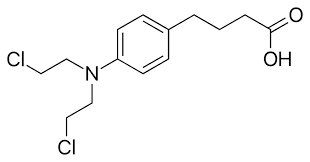
This is Chlorambucil, one of the chemotherapy drugs still used today that was based on nitrogen mustard!
Works Cited
DeVita, Vincent T., and Edward Chu. “A History of Cancer Chemotherapy.” Cancer Research, vol. 68, no. 21, 30 Oct. 2008, pp. 8643–8653, aacrjournals.org/cancerres/article/68/21/8643/541799/A-History-of-Cancer-Chemotherapy, https://doi.org/10.1158/0008-5472.can-07-6611.
Falzone, Luca, et al. “Evolution of Cancer Pharmacological Treatments at the Turn of the Third Millennium.” Frontiers in Pharmacology, vol. 9, no. 1300, 13 Nov. 2018, www.frontiersin.org/articles/10.3389/fphar.2018.01300/full, https://doi.org/10.3389/fphar.2018.01300.
Quinn, Roswell. “Rethinking Antibiotic Research and Development: World War II and the Penicillin Collaborative.” American Journal of Public Health, vol. 103, no. 3, Mar. 2013, pp. 426–434, https://doi.org/10.2105/ajph.2012.300693.
“Selman Waksman: Rutgers Alumnus, Researcher and Nobel Prize Winner Developed System to Discover Antibiotics.” Www.rutgers.edu, www.rutgers.edu/news/selman-waksman-rutgers-alumnus-researcher-and-nobel-prize-winner-developed-system-discover.
“What Do the Six Main Types of Chemotherapy Actually Do?” CCLG – the Children & Young People’s Cancer Association, CCLG – The Children & Young People’s Cancer Association, May 2023, www.cclg.org.uk/news-updates/what-do-six-main-types-chemotherapy-actually-do.