Natural vs Organic Labels: Does it Matter?
Walking around the grocery store, it is common to see foods labeled as “organic” or “natural”. Many think that there is no obvious distinction between the two terms, with some believing that natural means that the food is healthier for you. Perhaps this is due to the label’s appeal to the nature fallacy, but 62% of grocery store users search for the “natural” label, thinking that it means that the food contains no artificial ingredients, chemicals, pesticides,or GMOs. Some customers are even willing to pay more for a food marked with a “natural”. So there is no surprise that the natural food market has grown to be $40 billion industry. However, this conception of what natural really is tends to sway away from the truth. In reality, the term “natural” has no clear definition, so markets often use the term as they see fit. But what exactly do these terms entail? Does one indicate the food is healthier than the other? This will be explained in this article!
What Does “Natural” Mean:
As mentioned before, there is no clear definition of the term “natural”. In regards to using the term “natural”, The Food and Drug Adminsitartion claims that ““the agency has not objected to the use of the term if the food does not contain added color, artificial flavors, or synthetic substances.” Adding more fuel to the fire, the U.S. Department of Agriculture does not the regulate the natural label for crops. In general a food cannot be “natural” if it has artificial or synthetic ingredients or color additives. Still, this definition does not account for GMOs (genetically modified organisms), ultra-processing, and certain production methods, such as using pesticides. With such a general definition of the term, companies often interpret it in different ways. This is why foods labeled “natural” can contain things we wouldn’t expect them to. For example, they can contain natural flavors, sweeteners, and other plant-derived substances. Furthermore, high fructose corn syrup can be used in foods labeled “natural” since the synthetic materials that are used to make it are not present in the final food.
While foods with the “natural” label may not be regulated use of natural flavors is. Natural flavors are anything extracted from a plant or animal source. However, this does mean that natural flavors only contain plant/animal extract. Although derived from a natural source, the flavor ultimately consumed by buyers is often remarkably different from the original material. Natural flavors are not single substances but complex mixtures of chemicals obtained through extensive physical separation and processing methods. By the time these flavors are ready for consumption, they may contain up to 250 chemically identified constituents, some of which are synthetic or artificially produced.
What Does “Organic” Mean:
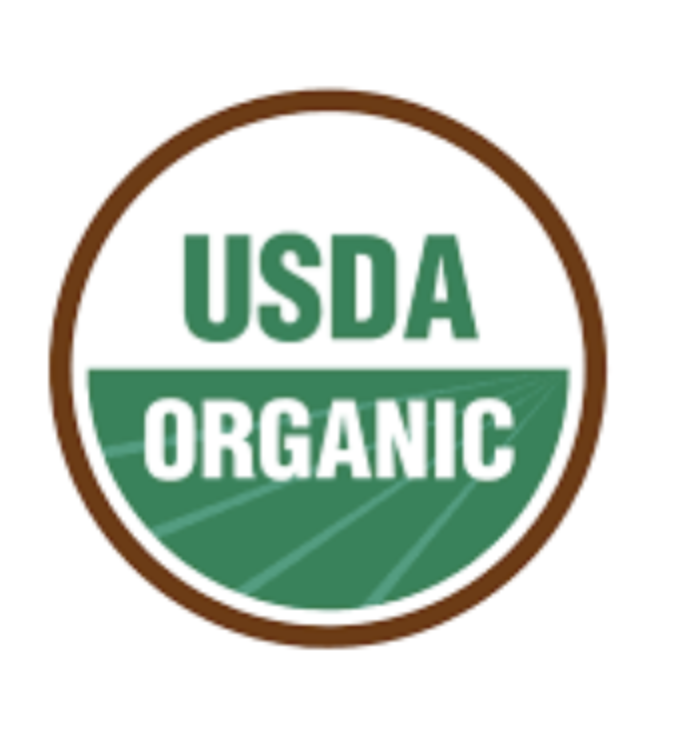
Unlike the “natural” label, the USDA Certified Organic label is rigorously regulated by the USDA and the FDA. Foods with “organic label” are free from toxic pesticides, chemicals, synthetic growth hormones, antibiotics, GMOs, artificial additives, and preservatives. Furthermore, they are grown using organic farming practices. There are around four different kinds of organic labels: 100% Organic, Orgonic, Made with Organic ___, or an ingredients list containing organic ingredients. The only ones that can obtain the USDA Certified Organic label, however, are the 100% organic label and the organic label.
- 100% Organic
- Indicates that a product contains 100 percent organic ingredients (salt and water are not included)
- Minimally processed or unprocessed products can be 100% organic
- Organic
- Products contain up to 95% of organic ingredients, not including salt or water
- A maximum of 5% of ingredients may be nonorganic ingredients listed in the National List.
- Made with Organic _____
- The product contains a minimum of 70% organic ingredients, not including salt or water.
- Organic Ingredient Listings
- If a product contains less than 70% of organic ingredients, the organic ingredients are listed in the ingredient list.
- The product may not have a USDA organic seal.
Conclusion:
It is important to know the difference between organic and natural problems so you do not mix the two up! In sum, if you want a product that is regulated and has to pass through a plethora of examinees choose the organic labeled product!
Works Cited
Ball, Serena. “What Does “Natural” Actually Mean on Food Labels?” Food Network, 14 Nov. 2025, www.foodnetwork.com/healthyeats/food-and-nutrition-experts/what-does-natural-mean-food-labels.
Dunckel, Mary, et al. “Natural and Organic Label Claims.” Agriculture, 30 Sept. 2020, www.canr.msu.edu/resources/natural-and-organic-label-claims.
Goodman, Matthew J. “A Regulatory Viewpoint.” Food and Drug Law Journal, vol. 72, no. 1, 2017, pp. 78–102. JSTOR, www.jstor.org/stable/26661129, https://doi.org/10.2307/26661129.
Hansen, Joyanna. “Interpreting Food Labels: Natural versus Organic.” American Society for Nutrition, 2 Feb. 2013, nutrition.org/interpreting-food-labels-natural-versus-organic/.
“Natural vs. Organic: Does the Label Matter? – Rodale Institute.” Rodale Institute, 2 Oct. 2019, rodaleinstitute.org/blog/natural-vs-organic-does-the-label-matter/.
USDA. “Becoming a Certified Operation | Agricultural Marketing Service.” Usda.gov, 2019, www.ams.usda.gov/services/organic-certification/becoming-certified.
—. “Organic Labeling | Agricultural Marketing Service.” Usda.gov, 2019, www.ams.usda.gov/rules-regulations/organic/labeling