
Reading a Nutrition Label: It's Easier Than You Think
Every single one of us sees nutritional labels every day, whether you realize it or not. It may have been from the oats you ate this morning or from the energy drink you were drinking. Whatever it was, as a society, some of us tend to neglect them. However, it’s more important than you realize. This is exactly why I will teach you how to read one!
Step 1: Look at the serving size
The serving size refers to the general amount people usually eat of the particular food or drink. They reflect standardized measurements such as grams and cups. Pay attention to how many serving sizes are in a container. Remember, they reflect the typical amount a person eats, not what is healthy or good for you. The serving size is located at the top of a nutritional label. The rest of the nutritional facts will reflect the serving size. If you eat half or double the serving, you would need to apply the same to the rest of the nutritional facts. Below the serving size are the calories—energy your body uses. In general, nutritional label percentages reflect a 2000-calorie daily diet. However, the amount of calories you eat depends on your age, height, and various factors.
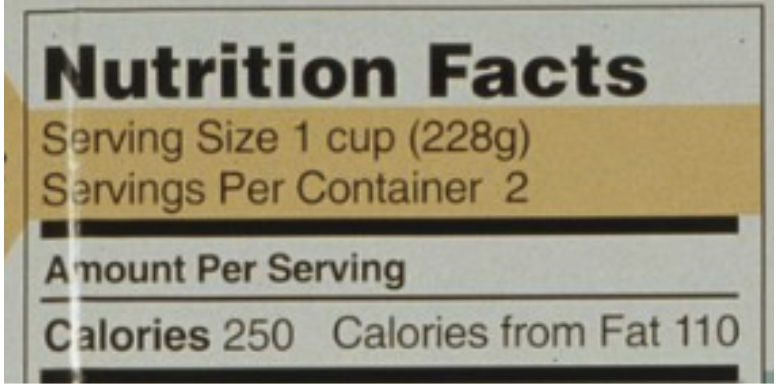
Step 2: Nutrients
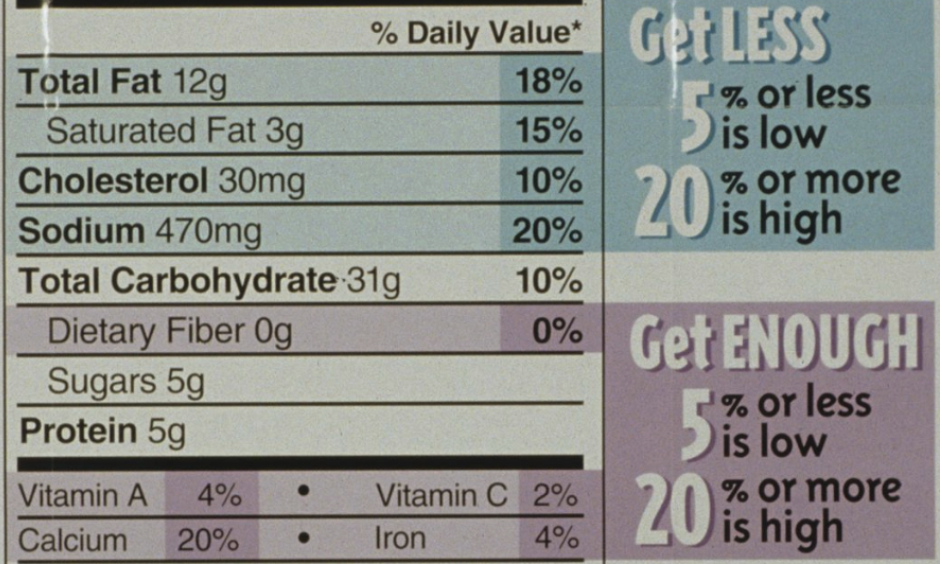
Nutrients are the core of a food and a drink, and they indicate whether a food is healthy or bad for you. In this picture, the blue are all nutrients that you want to eat a low amount of. A good rule of thumb is to stay in between 5%–20%. What specifically should you watch out for? Well, sodium, saturated fats, and added sugars are all things to eat less of. Saturated fats are a type of fat that can increase your chances of heart disease and obesity if you eat too much of it. They are typically solid at room temperature and are found in full-fat dairy, coconut and palm oil, and other animal-based products. Sodium, or salt, increases blood pressure and in turn the risk of heart disease.
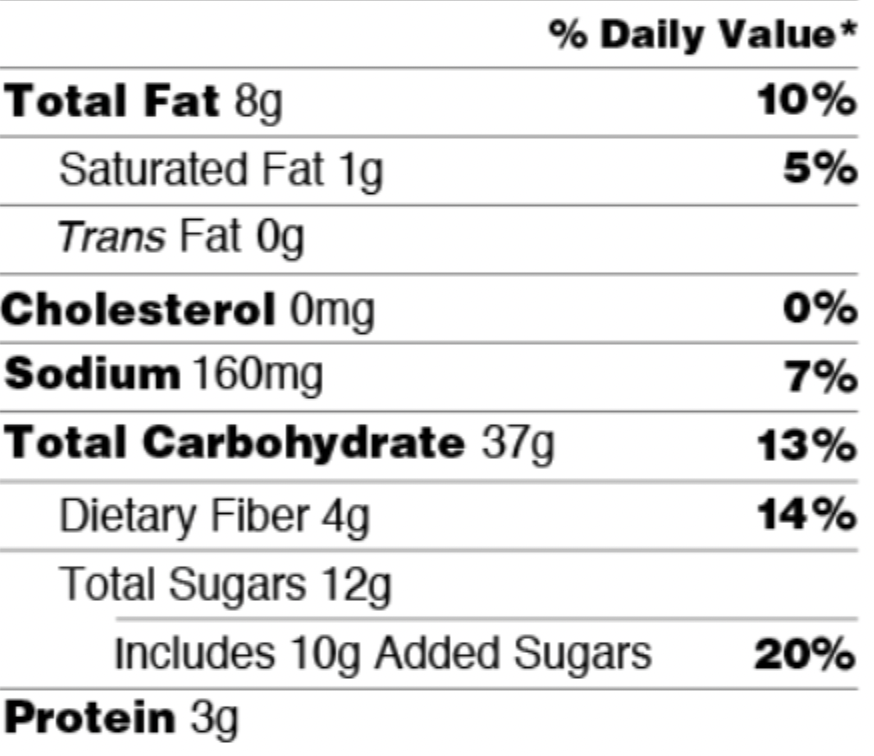
Since the previous label did not include total sugars, let’s talk about it with this one. Added sugars refer to the total amount of naturally occurring sugars and sugars added when processing (added sugars). Common examples of added sugars are sucrose and dextrose. Now, what nutrients do you need more of? Dietary fiber, potassium, protein, vitamin D, calcium, and iron are all vital to keep your body healthy.
Step 3: % Daily Value
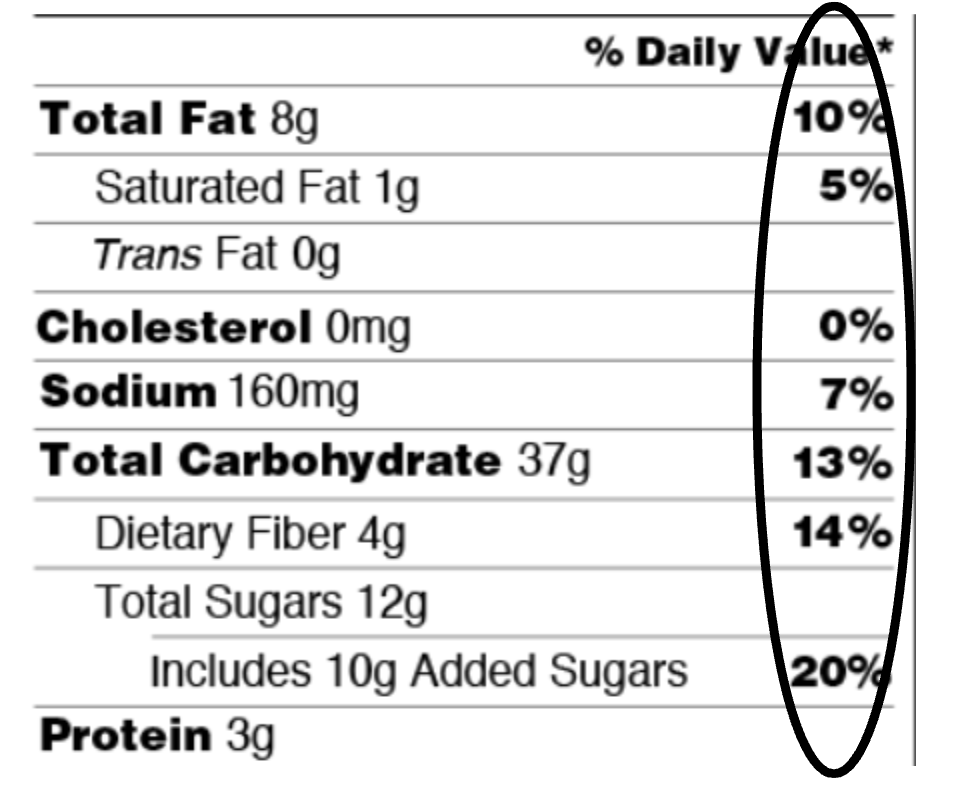
Remember how I said the percentages are based on a 2000-calorie intake? Well, let me explain it some more. The % Daily Value tells you how much of a nutrient in an amount of food is being incorporated into your daily diet (2000 calories). Let’s say you eat a granola bar with fiber’s % Daily Value of 14%. This means that that particular bar is giving you 14% of the fiber you need a day on a 2000-calorie diet.