
What Does it Actually Mean to Eat a Heart Healthy Diet?
What Does the Heart Do?
The heart is a fist-sized organ that is located at the center of your chest. The heart and blood vessels make up your cardiovascular system, whose main function is to transport blood throughout the body. Blood contains oxygen and nutrients which are essential for cells. The heart also controls your heart rate and maintains your blood pressure. Oxygen-poor blood enters the heart’s right atrium and ventricle and is pumped through the pulmonary arteries to the lungs. The lungs provide oxygen to the blood. This blood then enters the left atrium and ventricle and is pumped through the aorta throughout the body. The heart needs oxygen-rich blood as well! The coronary arteries, which branch out into smaller capillaries, surround the heart for that purpose. Electrical impulses keep the heart beating and keep blood circulating.
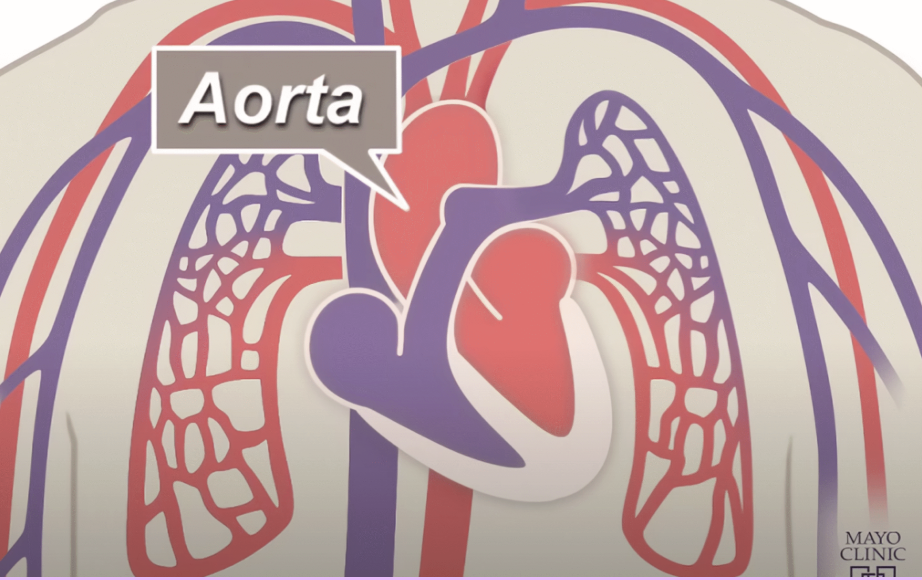
This image clearly shows the oxygen-poor blood (blue) entering the heart and lungs, and then being distributed throughout the body as oxygen-rich blood (red).
What is a Heart Healthy Diet:
Everyone should eat a heart-healthy diet to avoid heart disease. Heart disease is a broad term, but the most common examples are a myocardial infarction (heart attack), coronary artery disease, and angina. A heart attack is commonly caused by a blockage in one or multiple coronary arteries due to plaque. This blocks proper blood flow to the heart, preventing the heart from functioning properly and damaging cardiac muscle. Coronary artery disease (CAD) is the accumulation of plaque in the coronary arteries, which causes narrowing and restricted blood flow to the heart. CAD can lead to a heart attack, an arrhythmia (irregular beating of the heart), cardiac arrest (flow of blood stops), congestive heart failure (chronic failure of the heart to pump blood effectively to meet the metabolic needs of tissue). Blood pressure is not heart disease, but it is a risk factor for it. Hypertension (BP = 130/80 mmHg) is a main one to be specific. Essentially, the higher the blood pressure, the harder the heart has to pump. While heart disease has a genetic component, it is important to do everything in your power to reduce the risk of acquiring it which is why eating a heart healthy diet is so important.
The American Heart Association recommends eating:
A wide variety of vegetables and fruits
Whole grains
Healthy sources of protein (legumes, nuts, fish, and low-fat dairy)
Non-tropical oils (canola, corn, olive, soybean, and sunflower oils)
Minimally processed food
Limited sugar, sodium, and alcohol intake
Controlling how much you eat is of equal importance as what you eat! Try to control portion sizes, especially in restaurants. Tips include eating more lower-calorie, nutrient-rich foods while limiting high-calorie processed foods. This manages excess calorie intake, preventing obesity and strain on the heart. Eating more fruits and vegetables helps prevent you from eating unhealthy, higher-calorie foods and is an amazing source of vitamins and minerals. However, you should limit coconut, vegetables with creamy sauces, fried or breaded vegetables, canned fruit in syrup, and frozen fruit with added sugar. Whole grains help control blood pressure and lower LDL cholesterol. Whole grains are also excellent sources of fiber, which helps you feel fuller. Unhealthy fats like saturated fat and trans fat should be limited, but trans fat specifically should be avoided. This lowers blood cholesterol, which can prevent the buildup of plaque in the arteries (causes CAD). Eating low-fat sources of protein is also beneficial. Plant proteins specifically lower the amount of fat and cholesterol you take in, which is vital. Sodium should be limited. The estimated salt intake is 2,300 milligrams, or around a teaspoon for adults daily. Salt encourages fluid retention, and when there is too much fluid, it increases the burden on the heart and blood vessels.
Works Cited
American Heart Association. “The American Heart Association’s Diet and Lifestyle Recommendations.” American Heart Association, American Heart Association, 30 July 2024, www.heart.org/en/healthy-living/healthy-eating/eat-smart/nutrition-basics/aha-diet-and-lifestyle-recommendations.
—. “Understanding Blood Pressure Readings.” American Heart Association, 17 May 2024, www.heart.org/en/health-topics/high-blood-pressure/understanding-blood-pressure-readings.
Cleveland Clinic. “Heart: Anatomy and Function.” Cleveland Clinic, Cleveland Clinic, 26 Jan. 2024, my.clevelandclinic.org/health/body/21704-heart.
The Heart and Circulatory System – How They Work. “The Heart and Circulatory System – How They Work.” YouTube, 19 June 2013, youtu.be/CWFyxn0qDEU.
World Heart Federation. “Hypertension.” World Heart Federation, 2023, world-heart-federation.org/what-we-do/hypertension/.